0426 416 748
Sydney WeldingMetal Fabrication
Welding Guide

Different Sorts Of Steel Metals

Published: 2024-01-31

Need Metal Welding Work?

Get a free quote from our expert welders

No obligation. We'll get back to you within 24 hours.

Different Sorts Of Steel Metals

If you're in the steel market, you might be overwhelmed by all of the available different types. How do you know which one is right for your project? In this blog post, we will explore the four most common types of steel and their key differences. From carbon steel to stainless steel and more, read on to learn about each type of steel and what sets it apart from the rest.

There are dozens of types of steel, each with unique chemical and physical properties. In this article, we'll take a look at the most common types of steel and how they're used.

Carbon steel is the most widely used type of steel. It's strong and durable, making it ideal for a variety of applications. Carbon steel can be further classified into four subcategories: low-carbon steel, medium-carbon steel, high-carbon steel, and ultra-high-carbon steel. Low-carbon steel contains less than 0.3% carbon, while ultra-high-carbon steel contains more than 2% carbon.

Alloy steels are made by combining carbon steel with one or more other metals. The most common alloying elements are manganese, chromium, nickel, molybdenum, vanadium, and silicon. Alloy steels are stronger and harder than carbon steels, making them ideal for applications that require high strength.

Tool steels are a special category of alloy steels that are particularly well suited for use in tooling and machining applications. Tool steels contain large amounts of carbon as well as other alloying elements such as chromium, vanadium, molybdenum, and tungsten.

Type 1: Carbon steel

Carbon steel, also known as plain-carbon steel, is a common material used in a variety of applications. It is made by smelting iron and carbon together in a furnace at a high temperature. This process gives the steel its high strength and hardness.

There are four main types of carbon steel: low-carbon steel, medium-carbon steel, high-carbon steel, and ultra-high-carbon steel. Low-carbon steel contains up to 0.30% carbon while ultra-high-carbon steel contains up to 2.0% carbon. The other two types fall somewhere in between these extremes.

Type 2: Alloy steel

Alloy steel is a type of steel that contains one or more alloying elements (a substance added to improve certain properties), resulting in improved strength, hardness, and resistance to wear and corrosion. The most common alloying elements are manganese, chromium, nickel, molybdenum, vanadium, and silicon.

There are two main types of alloy steel: low-alloy steel and high-alloy steel. Low-alloy steel contains a small number of alloying elements (usually no more than 5%), while high-alloy steel contains a larger number of alloying elements (usually 10% or more).

Type 3: Stainless steel

Type 3 stainless steel is a chromium-nickel steel that offers superior corrosion resistance to Type 2 and Type 4 stainless sheets of steel. It has a minimum of 18% chromium and 8% nickel content, making it more resistant to oxidation and corrosion than other types of stainless steel. This makes it an ideal choice for applications where exposure to chemicals or salt water is a concern.

Type 4: Tool steel

Tool steels are known for their hardness and resistance to wear, making them ideal for use in manufacturing cutting and drilling tools. However, tool steel is also difficult to work with, which can make it challenging to create the right products.

There are four main types of tool steel: water-hardening, oil-hardening, air-hardening, and high-speed steel. Water-hardening tool steel is the most common type, followed by oil-hardening tool steel.
What Is Alloy Steel?

Alloy steels are made by combining carbon steel with one or more other metals, such as manganese, chromium, nickel, vanadium, molybdenum, tungsten, or titanium. The resulting material has better properties than pure carbon steel. For example, the addition of chromium gives stainless steel its corrosion-resistant qualities.

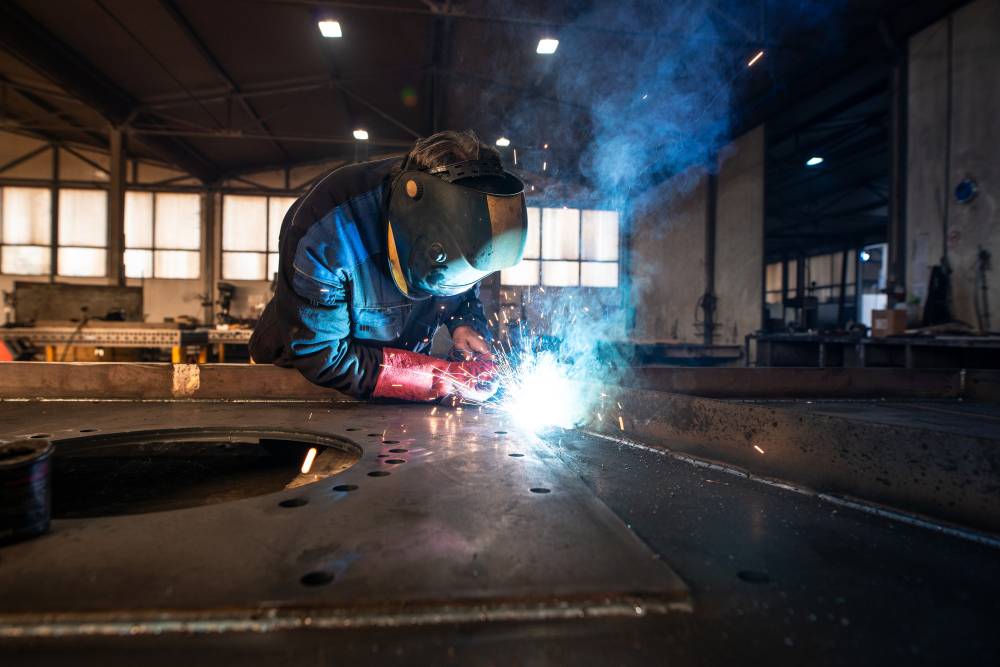
Different Sorts Of Steel Metals - welding illustration

What Are the Different Tool Steel Categories?

There are several different types of tool steel, each of which is designed for specific applications. The most common types are high-speed steel, hot-work steel, cold-work steel, and shock-resistant steel.

What Are the Different Categories of Stainless Steel?

There are four main types of stainless steel: austenitic, ferritic, martensitic, and duplex. Austenitic steels are the most widely used type of stainless steel. They have a higher chromium content and can be hardened by cold working. Ferritic steels are magnetic and have a lower carbon content. They cannot be hardened by heat treatment but are often used in automotive applications. Martensitic steels are similar to ferritic steels but can be hardened by heat treatment. Duplex steels are a combination of austenitic and ferritic steels and offer better corrosion resistance than either type of steel alone.

Different Sorts Of Steel Metals
Different Sorts Of Steel Metals - welding illustration
Professional welding services

Need Metal Welding Work?

Our expert welders are ready to help with your project. Call us now for a free quote.

Call Us Now

What Is Tool Steel?

Tool steel is a type of carbon steel that is specially designed for manufacturing tools. It is made with certain alloying elements that give it high hardness and wear resistance. Tool steel is generally harder and more resistant to heat and wear than other types of steel, making it ideal for use in power-driven applications.

What Is Stainless Steel?

Stainless steel is an alloy of iron, chromium, and nickel. It is a strong, durable metal that is resistant to rust and corrosion. Stainless steel is used in a variety of applications, from kitchen sinks to surgical instruments.

There are over 150 grades of stainless steel, each with its unique properties. The most common grades are 304 and 316. 304 stainless steel is the most widely used grade, due to its excellent corrosion resistance and formability. 316 stainless steel is ideal for applications where durability and resistance to salt water are required, such as in marine environments.

Key Takeaways

  • Always use proper safety equipment when welding or working with metal
  • Choose the right welding technique for your specific material and project
  • For professional results, contact licensed and certified welders

Need help with your project? Call Sydney Welding on 0426 416 748 for a free quote.

Conclusion

The four types of steel that we discussed in this article each have their unique properties and applications. Depending on what you need the steel for, one type may be better suited than another. For example, if you need strong and durable steel for construction purposes, then type 4 would be a good option. However, if you need more malleable steel for manufacturing purposes, then type 2 would be a better choice. Ultimately, it all comes down to what you need the steel for and which type will best suit your need

Different Sorts Of Steel Metals
Welding and fabrication
Metal fabrication services

Request a FREE Quote!

Or call us directly on 0426 416 748

No obligation. We'll get back to you within 24 hours.

More Welding Guides

4 Different Types of Welding Processes

4 Different Types of Welding Processes

The welding process is an important one in the manufacturing industry. It s a method used to join two or more pieces of metal together by using heat and pressure. The pressure is applied with an electrode, which is then connected to a power source. Welding is used in a variety of industries, including construction, automotive, aerospace, and more. It s a versatile process that can be used to create everything from small parts to large structures. There are four different types of welding process

Read Guide
4 Types of Steel: What Makes Them Different?

4 Types of Steel: What Makes Them Different?

Steel is one of the most common materials used in manufacturing and construction. It s strong, durable, and versatile, which makes it ideal for a wide range of applications. But did you know that there are different types of steel? In this blog post, we ll be taking a look at four of the most common types of steel and what sets them apart. Carbon Steel Carbon steel is one of the most common and versatile types of steel. It s composed of iron and carbon, which gives it a wide range of properties

Read Guide
Which Metal Will Burn? Australian General Engineering

Which Metal Will Burn? Australian General Engineering

Which Metal Will Burn? Australian General Engineering Have you ever wondered which metal will burn? We all know that metal is a good conductor of heat, but did you know that some metals are more flammable than others? In this blog post, we ll take a look at the different flammability levels of various metals, so you can be informed the next time you re working with them. We ll also explore how to extinguish a metal fire, in case you ever find yourself in that situation. What is the Difference Be

Read Guide

What things need to be considered for Welding Goggles ?

There are a lot of things that need to consider before purchasing welding goggles. In this blog post, we will discuss those things in detail so that you can make an informed decision. The first thing that you need to consider is the type of welding torch you will be using. There are two types of welding torche's available in the market gas and plasma. If you are using a gas welding torch, then you need to purchase gas welding goggles. On the other hand, if you are using a plasma welding torch, th

Read Guide
What's the Best Way to Cut Steel Wire Rope?

What's the Best Way to Cut Steel Wire Rope?

What is the process of Cut Steel Cable? Cutting steel cable is a process that requires the use of a specialized cutting tool. The most common type of cutting tool for this purpose is a rotary cutter, which uses a rotating blade to cut through the cable. There are also handheld cutting tools available that can be used to cut steel cables, but these are not as common. To cut steel cable with a rotary cutter, first make sure that the cutting tool is properly positioned and secured. Next, align the

Read Guide
What Is the Best Way to Cut Metal?

What Is the Best Way to Cut Metal?

In the metal industry, there are many ways to cut metal. But what is the best way to cut metal? This is a question that has been asked for years and one that still does not have a definitive answer. There are many factors to consider when trying to determine the best way to cut metal. The type of metal being cut, the thickness of the metal, the desired finish, and the budget all play a role in deciding which method is best. In this blog post, we will explore some of the most popular ways to cut

Read Guide