Welding helmets are a type of personal protective equipment (PPE) that helps protect welders from harmful welding fumes and UV rays. But did you know that welding helmets can also be made from flame-resistant materials? Flame-resistant welding helmets offer an extra layer of protection for welders and can help prevent serious injuries in the event of a welding accident. In this blog post, we’ll take a look at some of the benefits of flame-resistant welding helmets, and how they can help keep welders safe.
Welding Guide
Welding Helmets Flame Resistant Head Protection
Published: 2024-01-31
Need Metal Welding Work?
Get a free quote from our expert welders
What is welding?
Welding is a process of joining two pieces of metal together by using heat and pressure. The two pieces of metal are placed in a welding machine and an electric current is passed between them. This causes the metals to heat up and melt, allowing them to fuse.
Welding is a skilled trade that requires training and practice to master. There are several different types of welding, such as MIG welding, tig welding, and arc welding. Each type of welding has its advantages and disadvantages, so it’s important to choose the right type for the job at hand.
Welders must use personal protective equipment (PPE) when working, such as gloves, aprons, and helmets. Helmets are particularly important because they protect welders from harmful ultraviolet (UV) rays emitted by the welding process.
There are many different brands and styles of welding helmets on the market, so it’s important to choose one that’s comfortable to wear and provides adequate protection. Some helmets have built-in ventilation systems to help keep welders cool, while others have darkening lenses that automatically adjust to the level of light being emitted by the welding machine.
What are the dangers of welding?
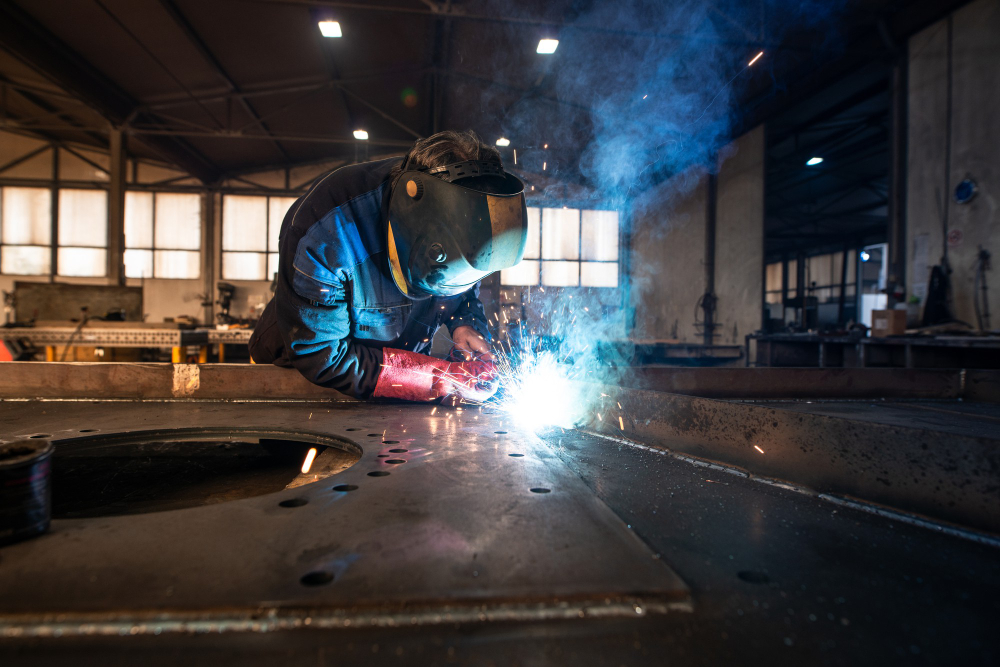
Welding is a process that uses high levels of heat and electricity to melt and join pieces of metal together. While it is a very useful process, welding can also be dangerous. The most common hazard associated with welding burns. The intense heat of the welding arc can cause serious burns to the skin and eyes. Welders must always wear proper protective clothing and use safety equipment, such as welding helmets, to protect themselves from these dangers.
Another hazard associated with welding is exposure to harmful fumes and gases. The fumes produced by welding can contain toxins that can be harmful to the lungs if inhaled. Welders must work in well-ventilated areas and wear respiratory protection to avoid breathing in these harmful fumes.
Flash burns are another type of injury that can occur while welding. These burns are caused by the bright flashe's of light produced by the welding arc. Welders must wear properly fitting welding helmets with dark lenses to protect their eyes from these flashes.
Finally, electric shock is a potential hazard for welders. The high levels of electricity used in welding can cause serious injuries if not properly controlled. Welders must always follow safety procedures and use properly grounded equipment to avoid the risk of electric shock.
What are welding helmets?
Welding helmets are strong, flame-resistant head protection gear that helps shield welders from the intense light and heat of the welding process. A good welding helmet will also have a dark-tinted lens to protect the welder’s eyes from the bright sparks.
How do welding helmets work?
Welding helmets are an essential piece of personal protective equipment (PPE) for welders. They are designed to protect the welder’s face, head and neck from the intense heat, light and sparks produced during welding.
Welding helmets typically have a lens made of tinted glass or a dark-coloured filter that protects the welder’s eyes from the bright light produced by the welding process. The helmet also has a headband and neck protector to keep sparks and hot debris from coming into contact with the welder’s skin.
Some welding helmets also feature an integrated respiratory system that filters out harmful fumes and gases produced by the welding process. This is particularly important in environments where there is poor ventilation.
When choosing a welding helmet, it is important to
Different types of welding helmets
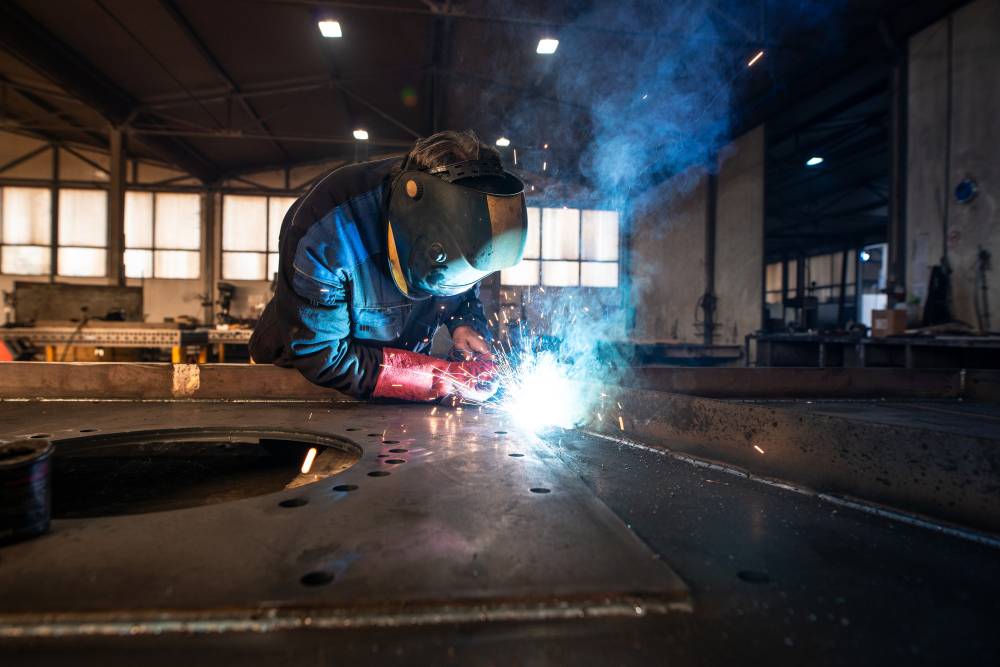
Different welding helmets serve different purposes. Some are designed for specific types of welding, such as arc welding or gas welding. Others are designed for more general use.
Some helmets have built-in ventilation to keep the welder’s face cool, while others have darkly tinted lenses to protect the welder’s eyes from the bright light of the weld. Some helmets have both features.
There are also welding helmets that are specifically designed for use with a respirator. These helmets have a hole in the front that allows the respirator hose to be fed through.
Welding helmets can also be equipped with a face shield. This is a clear plastic sheet that covers the entire front of the helmet, protecting the welder’s face from flying sparks and hot metal shards.
Need Metal Welding Work?
Our expert welders are ready to help with your project. Call us now for a free quote.
Call Us NowHow to choose the right welding helmet
When it comes to welding helmets, there are many factors to consider to choose the right one. The most important factor is safety, followed by comfort and fit.
The first step in choosing a welding helmet is to determine what type of welding you will be doing. There are four main types of welding: shielded metal arc welding (SMAW), gas tungsten arc welding (GTAW), gas metal arc welding (GMAW), and flux-cored arc welding (FCAW). Each type of welding has its own specific set of requirements for a helmet.
Once you know what type of welding you’ll be doing, you can narrow down your options and start considering specific features. Some important things to look for in a helmet include:
-A clear view: The lens on a welding helmet should offer a clear, unobstructed view of your work area.
-Good ventilation: Look for a helmet with good ventilation to help keep you cool and comfortable while working.
-A comfortable fit: Make sure the helmet you choose fits comfortably and securely on your head.
HOW TO USE THE CONTROL SETTINGS OF YOUR WELDING HELMET
When it comes to welding helmets, there are a few different ways that you can control the settings. The most common way is by using the knob on the side of the helmet. This will allow you to adjust the shade of the lens and the sensitivity of the sensor.
Another way to control your welding helmet is by using a foot pedal. This is typically used by professionals who need to have their hands free while they are welding. The pedal will be connected to the helmet and will allow you to adjust the settings without having to use your hands.
Finally, some welding helmets come with remote control. This is a great option if you want to be able to adjust your settings from a distance. The remote will usually be able to control all of the same functions as the other methods mentioned above.
No matter which method you use, it is important that you take the time to learn how to properly use your welding helmet. By doing so, you can ensure that you are always protected from the harmful rays emitted by welding machines.

What is the role of the control settings?
The control settings on welding helmets serve two primary purposes: to protect the wearer’s face and eyes from the intense light created by the welding arc and to adjust the amount of light that is let in. Welding helmets typically have a darkening lens that can be adjusted to different shades, depending on the type of welding being performed. The shade is generally set so that the welder can see the weld pool, but not be blinded by the bright light. Additionally, many welding helmets have an auto-darkening feature that automatically darkens the lens when it detects an arc. Some helmets also have a sensitivity setting that controls how sensitive the helmet is to light, which can be useful in avoiding false alarms when working in well-lit areas.
Key Takeaways
- ✓ Always use proper safety equipment when welding or working with metal
- ✓ Choose the right welding technique for your specific material and project
- ✓ For professional results, contact licensed and certified welders
Need help with your project? Call Sydney Welding on 0426 416 748 for a free quote.

Conclusion
Welding helmets are an important piece of equipment for anyone who does welding regularly. Not only do they protect your face and eyes from the bright flashe's of light that come with welding, but they also help to keep your head cool while you work. With so many different welding helmet options on the market, it’s important to find one that fits your needs and budget. Be sure to check out our selection of welding helmets to find the perfect one for you.
Our Welding Services
Looking for professional welding work? Check out our full range of services.
Request a FREE Quote!
Or call us directly on 0426 416 748
More Welding Guides

4 Different Types of Welding Processes
The welding process is an important one in the manufacturing industry. It s a method used to join two or more pieces of metal together by using heat and pressure. The pressure is applied with an electrode, which is then connected to a power source. Welding is used in a variety of industries, including construction, automotive, aerospace, and more. It s a versatile process that can be used to create everything from small parts to large structures. There are four different types of welding process
Read Guide
4 Types of Steel: What Makes Them Different?
Steel is one of the most common materials used in manufacturing and construction. It s strong, durable, and versatile, which makes it ideal for a wide range of applications. But did you know that there are different types of steel? In this blog post, we ll be taking a look at four of the most common types of steel and what sets them apart. Carbon Steel Carbon steel is one of the most common and versatile types of steel. It s composed of iron and carbon, which gives it a wide range of properties
Read Guide
Different Sorts Of Steel Metals
If you re in the steel market, you might be overwhelmed by all of the available different types. How do you know which one is right for your project? In this blog post, we will explore the four most common types of steel and their key differences. From carbon steel to stainless steel and more, read on to learn about each type of steel and what sets it apart from the rest. There are dozens of types of steel, each with unique chemical and physical properties. In this article, we ll take a look at
Read Guide
Which Metal Will Burn? Australian General Engineering
Which Metal Will Burn? Australian General Engineering Have you ever wondered which metal will burn? We all know that metal is a good conductor of heat, but did you know that some metals are more flammable than others? In this blog post, we ll take a look at the different flammability levels of various metals, so you can be informed the next time you re working with them. We ll also explore how to extinguish a metal fire, in case you ever find yourself in that situation. What is the Difference Be
Read GuideWhat things need to be considered for Welding Goggles ?
There are a lot of things that need to consider before purchasing welding goggles. In this blog post, we will discuss those things in detail so that you can make an informed decision. The first thing that you need to consider is the type of welding torch you will be using. There are two types of welding torche's available in the market gas and plasma. If you are using a gas welding torch, then you need to purchase gas welding goggles. On the other hand, if you are using a plasma welding torch, th
Read Guide
What's the Best Way to Cut Steel Wire Rope?
What is the process of Cut Steel Cable? Cutting steel cable is a process that requires the use of a specialized cutting tool. The most common type of cutting tool for this purpose is a rotary cutter, which uses a rotating blade to cut through the cable. There are also handheld cutting tools available that can be used to cut steel cables, but these are not as common. To cut steel cable with a rotary cutter, first make sure that the cutting tool is properly positioned and secured. Next, align the
Read Guide